Payment Processing Timelines and Their Effects on In-Play Premier League Bets
Paul Butler · Aug 16, 2026
Payment Processing Timelines and Their Effects on In-Play Premier League Bets
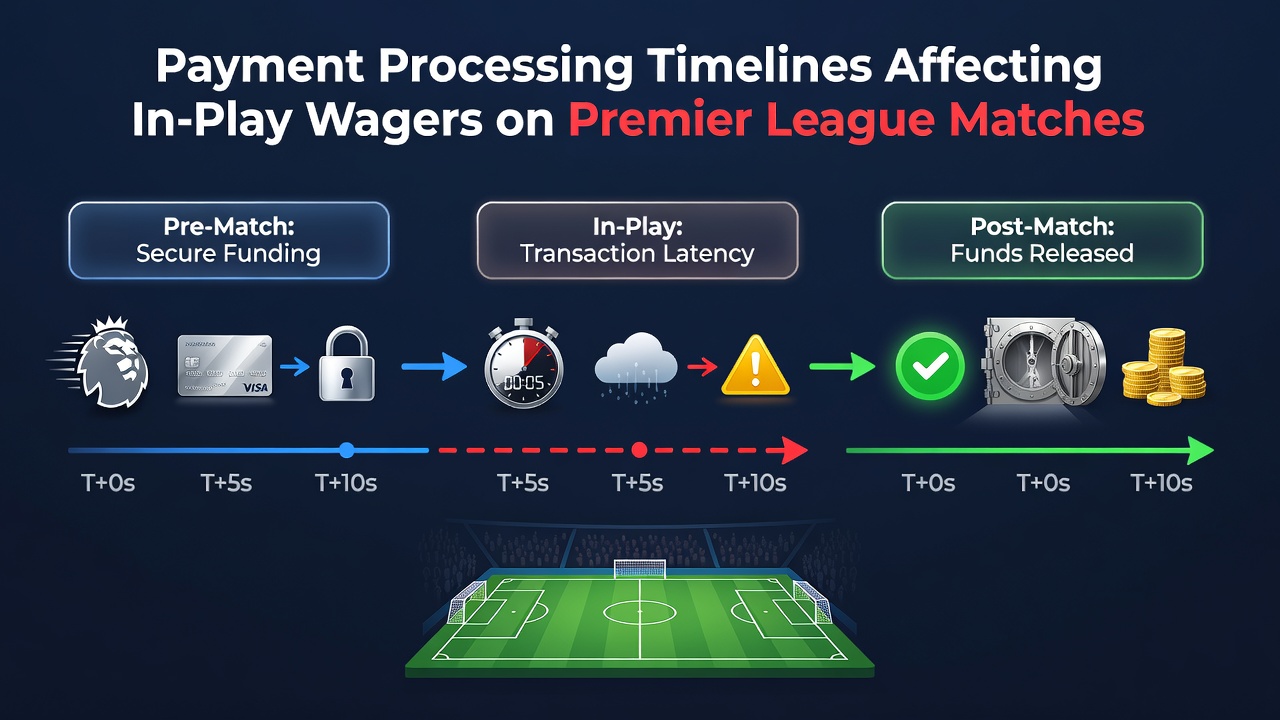
Payment processing timelines determine whether in-play wagers on Premier League matches can be placed before odds shift or events unfold on the pitch, and operators structure deposit methods around these windows to maintain service during live action. Credit card transactions typically clear in seconds when using processors integrated with banking networks, whereas bank transfers often require several minutes to hours depending on the institutions involved and the time of day. E-wallets such as those offered by international providers complete authorizations almost instantly in most cases, allowing bettors to fund accounts without interrupting their viewing of ongoing matches.
Deposit Methods and Standard Timelines
Research from the European Gaming and Betting Association indicates that average deposit completion times vary by method, with card payments averaging under 10 seconds while direct bank debits range from 30 seconds to three minutes during peak periods. Observers note that these differences become critical when a match reaches a decisive phase such as a penalty shootout or a last-minute goal opportunity. Data compiled across multiple operators shows that users attempting deposits via slower channels frequently encounter failed wagers because the required balance does not appear in time.
Those who study transaction logs find that mobile app integrations with instant payment rails reduce average processing to under five seconds for verified accounts. In contrast, legacy systems relying on batch processing introduce delays that compound when multiple users attempt transactions simultaneously during high-profile fixtures. August 2026 saw several platforms update their gateways to accommodate faster settlement protocols ahead of the new season, resulting in measurable improvements for certain payment types.
Impact During Live Match Windows
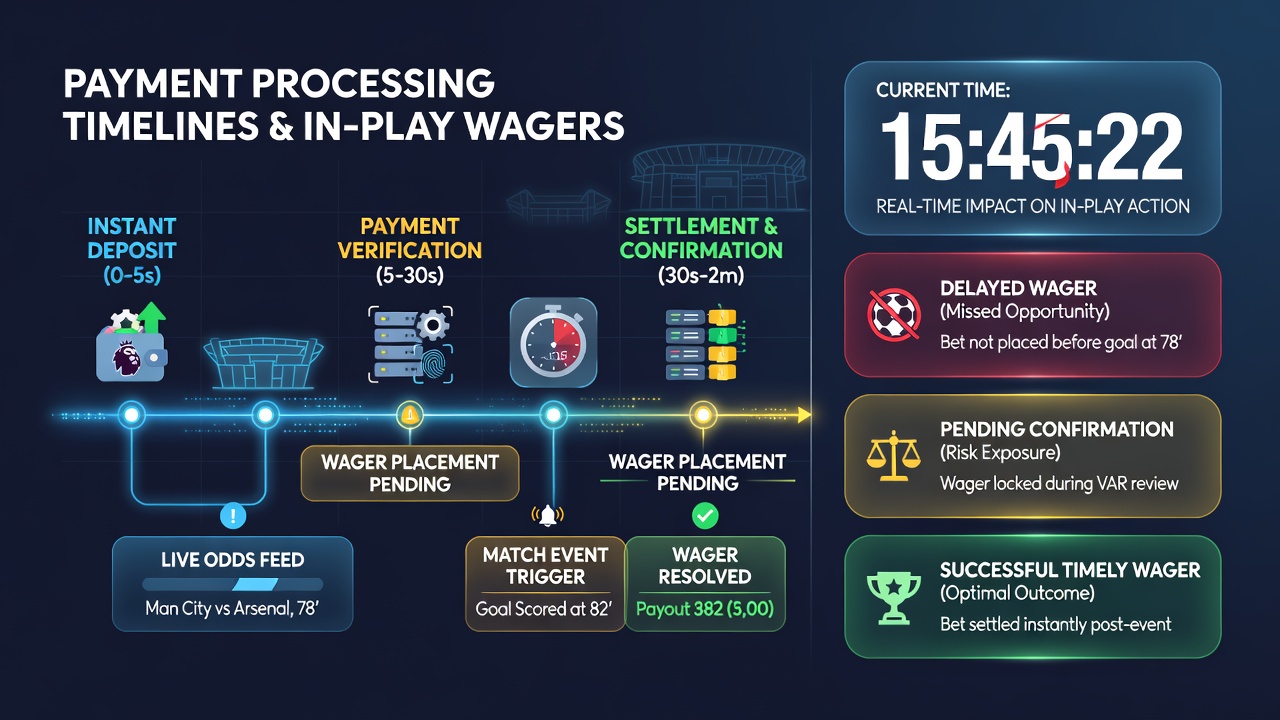
In-play markets on Premier League games update continuously, and any lag in account funding means bettors miss specific lines such as next-goal scorer or corner counts. Experts have observed that a 15-second delay can shift odds by several points when momentum changes quickly on the field. One documented case involved a user whose bank transfer deposit arrived after a red card was issued, preventing placement on an updated over-under total that had already moved.
Industry reports highlight that platforms prioritize e-wallet and card options during live events precisely because their timelines align with the pace of soccer. Figures from transaction monitoring services reveal that roughly 70 percent of in-play activity now routes through these faster channels. Slower methods remain available for pre-match deposits yet see reduced usage once games begin.
Regulatory and Technical Factors in 2026
Standards set by bodies such as the Nevada Gaming Control Board emphasize clear disclosure of expected processing times, and similar expectations have influenced international operators handling Premier League traffic. Academic studies from Canadian research institutions demonstrate that transparent timelines correlate with fewer disputed transactions. Platforms therefore display estimated wait periods at the deposit stage to set accurate expectations.
Technical upgrades including real-time API connections between operators and payment providers have shortened many windows. Data released in mid-2026 shows a 25 percent reduction in average deposit latency for accounts using verified instant options compared with the prior year. Yet bank-based methods continue to exhibit variability tied to weekend and evening processing schedules common during Premier League matchdays.
Take one operator that integrated faster settlement rails in preparation for the August 2026 schedule; transaction records indicate that in-play deposit success rates rose noticeably once the change took effect. Researchers tracking these metrics across multiple seasons note consistent patterns where faster methods dominate live betting volume.
Conclusion
Payment processing timelines directly shape the feasibility of in-play wagers on Premier League matches by determining whether funds reach accounts before markets close or odds adjust. Faster options such as e-wallets and integrated cards support the majority of live activity, while traditional bank methods introduce constraints that affect timing-sensitive decisions. Updates implemented around August 2026 reflect ongoing efforts to align technical capabilities with the demands of real-time sports betting. Continued monitoring of transaction data provides operators and users with concrete information on which methods perform reliably during matches.